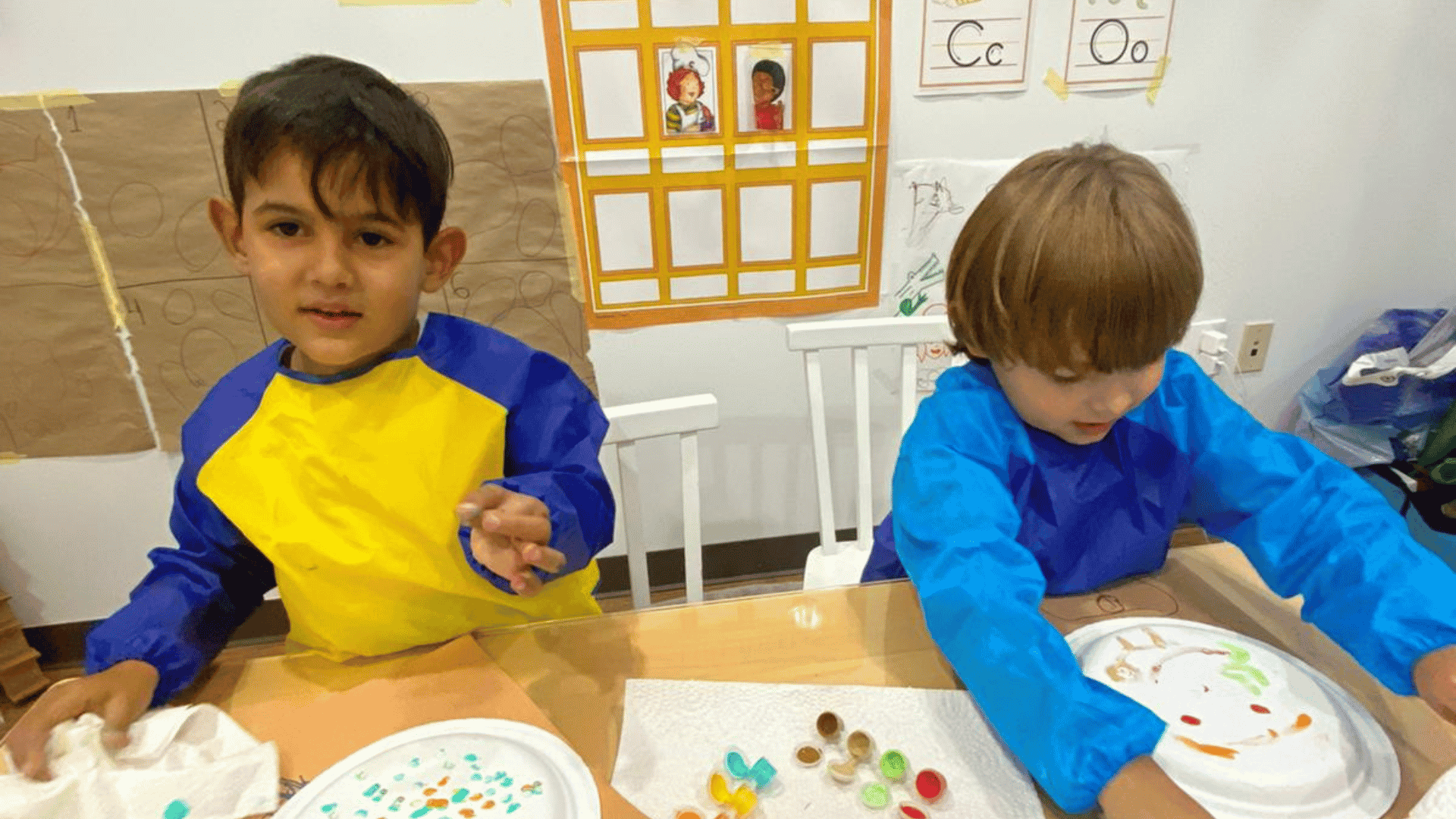
Academic achievement has always been the most visible measure of a school's success. Test scores, GPAs, and college acceptance rates are easy to point to, and for a long time they were treated as the full picture. In the years since the pandemic, however, parents, educators, and researchers have come to a shared and overdue conclusion: academic achievement without social-emotional health is not a complete education.
Social-emotional learning, commonly called SEL, describes the process through which students develop the self-awareness, interpersonal skills, emotional regulation, and resilience that determine how they function in the classroom, in relationships, and eventually in careers. These are not soft skills. They are foundational capacities that research has consistently linked to long-term academic performance, mental health, and professional success. And they are capacities that many traditional schools are structurally unable to prioritize.
Quick Summary
- Social-emotional learning (SEL) builds self-awareness, resilience, empathy, and interpersonal skills alongside academic development
- Research shows students with strong SEL foundations outperform peers academically and professionally over the long term
- Private schools with small class sizes are uniquely positioned to support SEL because teachers know every student personally
- Pluris Academy's model integrates SEL naturally through collaborative project-based learning, entrepreneurship, and The Garage
- Families looking for a school that develops the whole child will find Pluris's approach to be meaningfully different
What Is Social-Emotional Learning
SEL is often misunderstood as a feel-good curriculum addition or a response to student behavior problems. In practice, it is much more substantive than either of those descriptions suggests. The Collaborative for Academic, Social, and Emotional Learning (CASEL), which is the leading research organization in this field, defines SEL as the process of developing five core competencies.
These competencies are self-awareness, the ability to understand one's own emotions and how they affect behavior; self-management, the capacity to regulate emotions and impulses; social awareness, the ability to understand others' perspectives and show empathy; relationship skills, the tools to build and maintain healthy connections with other people; and responsible decision-making, the ability to make constructive choices in personal and social situations.
The Research Behind SEL Outcomes
The evidence for SEL is not anecdotal. A comprehensive analysis of SEL programs conducted across hundreds of studies found that students in quality SEL programs showed an 11 percentile point gain in academic achievement compared to peers who did not receive SEL instruction. They also demonstrated improved behavior, reduced emotional distress, and more positive attitudes toward school and learning.
Longitudinal research has extended these findings well into adulthood. Students with strong SEL foundations are more likely to graduate from high school and college, more likely to hold stable employment, and less likely to experience significant mental health challenges in their adult years. The investment in a student's social-emotional development in childhood pays dividends across an entire lifetime.
Why School Environment Shapes SEL More Than Curriculum
One of the most important findings in SEL research is that the most effective SEL does not come from a packaged curriculum delivered once a week. It comes from the environment students inhabit every day: the quality of their relationships with teachers, the culture of the classroom, the norms around how conflict is handled, and whether students feel genuinely known and valued.
This finding has significant implications for how families should evaluate schools. A school can have a formal SEL program on paper and still have an environment that undermines the very skills that program is meant to build. Conversely, a school whose daily structure, class sizes, and teaching philosophy naturally support belonging, collaboration, and self-reflection may develop SEL without ever naming it explicitly.
Why Class Size Is the Most Underrated SEL Variable
The relationship between class size and social-emotional development is one of the most consistently supported findings in education research, and it is one that large schools are rarely able to address. In a classroom of 30 students, a teacher is managing logistics, pacing, and behavior for the majority of the day. The time and attention required to notice when a student is struggling emotionally, to build the kind of trust that leads to honest conversation, and to create a classroom culture where every student feels safe is simply not available in the same way.
In a small class, that dynamic changes fundamentally. Teachers know their students' histories, their triggers, their strengths, and their friendship dynamics. They can intervene before a struggle becomes a crisis. They can structure group work in ways that support both the academic and relational development of every student in the room. They can be present in ways that matter.
How Pluris Academy's Model Supports Social-Emotional Development
Pluris Academy was not designed around an SEL program. It was designed around a philosophy of learning that, by its nature, develops the skills that SEL research identifies as most essential. That alignment is not accidental. It is the result of building a school around the way people actually learn best: collaboratively, with autonomy, with real stakes, and with the support of adults who know them well.
The Garage and Collaborative Learning
The Garage, Pluris's signature learning environment, is built entirely around collaboration. Students work together on projects that require them to negotiate roles, manage disagreements, communicate across differences, and support one another through the frustration that comes with genuinely challenging work. These are not simulated social skills exercises. They are the real thing, practiced repeatedly across years.
When a student has to present a project to their peers, advocate for a design choice under scrutiny, or recover productively from a failed prototype, they are developing exactly the resilience, self-awareness, and communication skills that SEL frameworks describe. They are learning by doing in every sense of the phrase. You can learn more about how project-based learning develops real-world skills here.
Small Classes and Real Relationships
Pluris's commitment to small class sizes means that every student is known. Teachers can identify when a student is disengaged, anxious, or struggling with a peer relationship, and they can respond in the moment rather than after a behavior incident has already occurred. The mentoring relationships that develop in a small school environment are the single most powerful SEL intervention available, and they happen naturally at Pluris because the structure makes them possible.
Entrepreneurship and Resilience
Resilience, which is one of the outcomes SEL research most consistently ties to long-term wellbeing, is built through experience with meaningful challenge and supported recovery from failure. Entrepreneurship education, by definition, involves this kind of experience. Students at Pluris learn to set ambitious goals, encounter obstacles, adjust their approach, and persist. They learn that failure is not a judgment but a data point. This mindset, developed over a K-12 career, is one of the most durable gifts a school can give a student.
A Secular, Inclusive Community
SEL research is clear that students develop social-emotional skills best in environments where they feel genuinely safe and accepted. Pluris's secular, nonsectarian environment means that students from every background, belief system, and family structure are fully welcomed without qualification. The diversity of the community enriches every student's social awareness and empathy in ways that a more homogeneous school environment cannot replicate.
What to Look for When Evaluating SEL in a School
For families who are actively evaluating schools on the basis of social-emotional support, the most important things to look for are not printed on a brochure. They are visible during a school visit.
Watch how students interact with each other and with teachers. Listen for whether students speak up freely or wait to be called on. Notice whether the school culture feels warm and relational or transactional and compliance-oriented. Ask how the school handles conflict between students, how it identifies and supports students who are struggling emotionally, and what the teacher turnover rate looks like, because consistency in adult relationships is foundational to SEL.
The answers to those questions will tell you far more about a school's real SEL culture than any curriculum document. To experience Pluris's environment firsthand, we encourage you to schedule a visit and see it for yourself.
Frequently Asked Questions
What is social-emotional learning and why does it matter?
Social-emotional learning refers to the development of skills including self-awareness, emotional regulation, empathy, and interpersonal communication. Research consistently shows that students with strong SEL foundations outperform peers academically and are better prepared for professional and personal success in adulthood.
Does Pluris Academy have a formal SEL program?
Pluris integrates social-emotional development throughout its educational model rather than delivering it as a standalone curriculum. The small class sizes, collaborative project-based learning environment, and entrepreneurship pathway naturally develop the core competencies that SEL research identifies as most important.
How do small class sizes improve social-emotional development?
In smaller classes, teachers can build genuine relationships with every student, identify struggles early, and create a classroom culture where students feel safe to take risks, ask questions, and be honest about difficulties. These conditions are foundational to healthy social-emotional development and are very difficult to replicate in large school environments.
What does The Garage have to do with SEL?
The Garage is Pluris's project-based entrepreneurship learning environment. Because students work collaboratively on real projects with real challenges, they develop resilience, communication, empathy, and responsible decision-making through direct experience rather than through a curriculum. These are the exact skills that SEL frameworks identify as most important for long-term success.
How can I evaluate a school's SEL culture before enrolling?
The most reliable way is to visit the school during a regular school day and observe how students and teachers interact. Ask about conflict resolution processes, how the school identifies students who are struggling emotionally, and what support systems are in place. The quality of relationships you observe will tell you more than any published program description.
The Whole Child Deserves the Whole School
Academic achievement and social-emotional health are not competing priorities. The research is clear that they reinforce each other, and the schools that understand this produce graduates who are not just academically capable but emotionally intelligent, relationally skilled, and genuinely prepared for everything that comes after graduation.
Pluris Academy was designed with this understanding at its core. Every element of the school, from the size of the classes to the nature of the work to the culture of the community, is oriented toward developing students who are strong in every dimension that matters. If that sounds like what you are looking for, we would love to show you what it looks like in practice.
Contact our admissions team to schedule a tour of Pluris Academy in Orlando.